Sebastian Vettel's Career in Formula 1
Early Career and Rise to Formula 1
Sebastian Vettel, born on July 3, 1987, in Heppenheim, Germany, emerged as one of the most successful and influential drivers in Formula 1 history. His journey began in karting, where he showcased remarkable talent. He progressed through the junior categories, excelling in Formula BMW, where he won the 2004 championship with a dominant 18 wins in 20 races. His rapid ascent through Formula 3 and Formula Renault 3.5 caught the attention of Red Bull’s driver development program, securing him a reserve driver role in F1.
Toro Rosso and First Grand Prix Win (2007-2008)
Debut with BMW Sauber (2007)
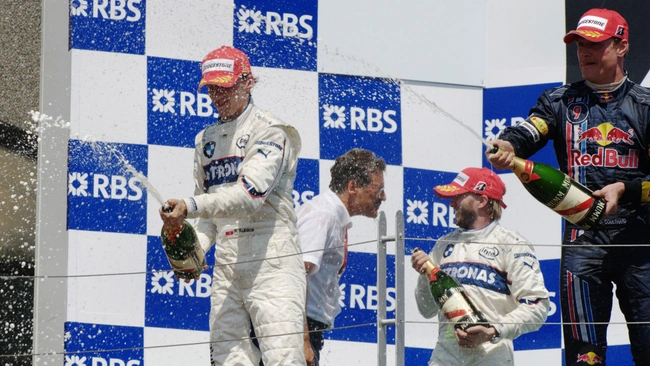
Vettel made his Formula 1 debut in 2007 as a substitute for Robert Kubica at the United States Grand Prix with BMW Sauber. He impressed immediately, finishing in the points with a solid eighth place, becoming the youngest driver at the time to score an F1 point.
Breakthrough with Toro Rosso (2008)
In 2008, Vettel secured a full-time seat with Scuderia Toro Rosso. Despite driving for a midfield team, he delivered standout performances, culminating in a stunning victory at the Italian Grand Prix in wet conditions. This made him the youngest race winner in F1 history at the time and showcased his exceptional wet-weather skills and raw pace.
Red Bull and Four Consecutive World Championships (2009-2013)
Establishing Red Bull as a Dominant Force (2009-2010)
Vettel was promoted to Red Bull Racing in 2009, marking the beginning of an era of dominance. He finished as runner-up in the championship, narrowly missing out on the title to Jenson Button. However, 2010 saw him secure his first World Championship in dramatic fashion, winning the Abu Dhabi Grand Prix and becoming the youngest World Champion in history at 23 years old.
Unmatched Supremacy (2011-2013)
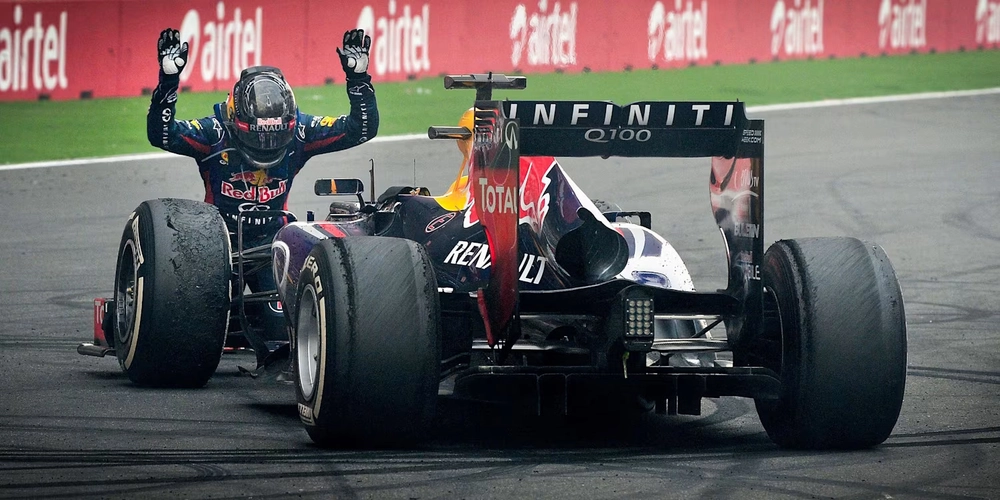
From 2011 to 2013, Vettel and Red Bull dominated the sport. His 2011 season was nearly flawless, securing 11 wins and comfortably winning his second consecutive title. The 2012 season was a more intense battle, with Vettel staging a dramatic comeback to win the championship in the final race. In 2013, he was at his peak, claiming 13 wins, including nine consecutive victories, to secure his fourth straight title. His dominance was often compared to legends like Michael Schumacher.
Ferrari: The Pursuit of a Fifth Title (2015-2020)
Leaving Red Bull and Joining Ferrari (2015)
After a challenging 2014 season with Red Bull, Vettel moved to Ferrari in 2015, hoping to replicate the success of his idol, Schumacher. He won in just his second race with Ferrari, signaling a revival for the team.
Title Contention and Near Misses (2017-2018)
Ferrari provided Vettel with competitive cars in 2017 and 2018, allowing him to challenge Lewis Hamilton and Mercedes for the championship. Despite leading the title race at various points, errors and strategic missteps ultimately cost him both championships, with Hamilton emerging victorious each time.
Ferrari’s Decline and Departure (2019-2020)
Ferrari’s performance declined in 2019, and Vettel struggled with an inconsistent car. In 2020, Ferrari announced they would not renew his contract, leading to a disappointing final season with the team.
Aston Martin and Retirement (2021-2022)
A New Chapter with Aston Martin
In 2021, Vettel joined Aston Martin, hoping to help develop the team into a competitive force. He secured a podium in Azerbaijan and finished second in Hungary before being disqualified due to a fuel sample issue. Despite flashes of brilliance, the car was not competitive enough to fight at the front.
Retirement from Formula 1 (2022)
After two seasons with Aston Martin, Vettel announced his retirement at the end of 2022. His farewell was emotional, with tributes from fans, drivers, and teams recognizing his contributions to the sport.
Legacy and Impact on Formula 1
Sebastian Vettel’s career is defined by talent, dominance, and sportsmanship. As a four-time World Champion, he remains one of the most successful drivers in history. Beyond racing, his advocacy for environmental and social causes has left a lasting impact, proving that his influence extends beyond the track.