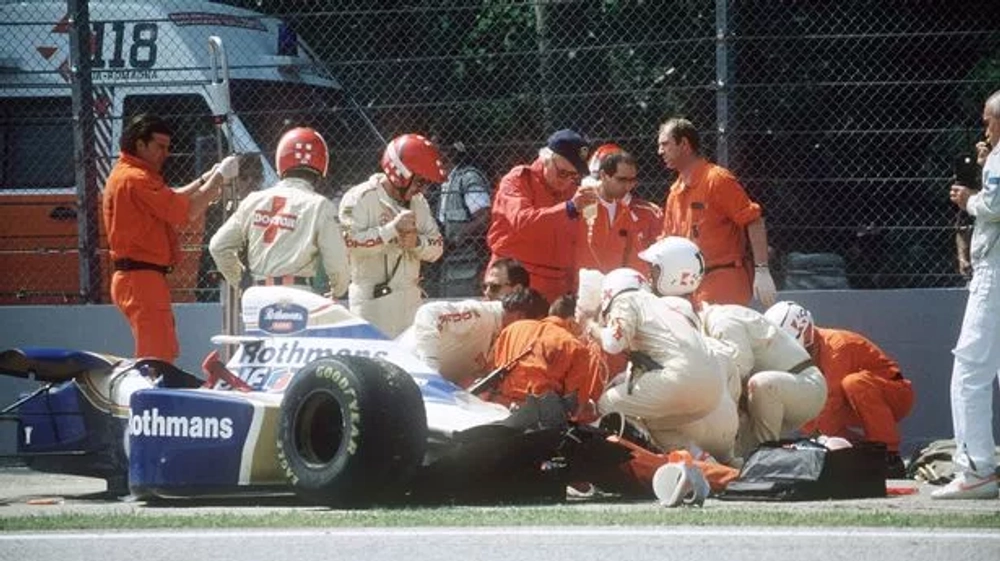
Senna's fatal crash at the San Marino Grand Prix
What Caused Senna’s Fatal Crash?
Ayrton Senna’s death on May 1, 1994, during the San Marino Grand Prix at Imola, remains one of the darkest days in Formula 1 history. The crash took place on the seventh lap of the race at the Tamburello corner, a high-speed left-hand turn, causing Senna to lose control of his car and collide with a concrete wall. The impact resulted in fatal head injuries.
Mechanical Failure
Investigations later revealed that the cause of the crash was linked to a steering column failure in Senna’s Williams FW16. At the moment of impact, Senna lost full control of the vehicle due to the steering malfunction. The failure happened under the high G-forces experienced by the car at high speed, preventing Senna from responding effectively.
Damaged Tire and Suspension
Another factor was a damaged tire that Senna had suffered earlier in the race. The flat-spotted tire affected the car’s handling and grip, further contributing to the difficulty in maintaining control. Additionally, the suspension of the car had been compromised, which exacerbated the situation and led to the car’s uncontrollable behavior.
The Legacy of Ayrton Senna
Senna’s passing had a profound impact on Formula 1, triggering widespread reforms and safety improvements within the sport.
Safety Measures
In response to Senna’s tragic accident, the sport made substantial strides to improve the safety of both drivers and cars. Key changes included:
- Stronger cockpit structures: Car manufacturers introduced reinforced cockpits designed to better protect drivers in the event of high-speed crashes.
- New crash barriers: Tracks were modified to include more forgiving barriers, particularly at high-speed corners like Tamburello, to reduce the likelihood of fatal injuries.
- Improved medical facilities: A greater emphasis was placed on trackside medical teams and emergency response protocols to ensure quicker and more efficient treatment for drivers involved in accidents.
Additional Facts About the 1994 Imola Weekend
- The weekend before Senna’s crash, the racing world had already been shaken by the fatal accident of Roland Ratzenberger, an Austrian driver, during qualifying. Ratzenberger’s death, coupled with Senna’s, made Imola 1994 one of the most tragic race weekends in F1 history.
- Senna had been leading the race at the time of the crash and was a favorite to win. His passing not only left a massive void in the sport but also drew attention to the inherent risks of motorsport.
- The FIA (Federation Internationale de l’Automobile) began an accelerated review of safety standards, eventually leading to the introduction of several new safety regulations across the sport.
Senna’s Enduring Legacy
Ayrton Senna is remembered not only as one of the greatest Formula 1 drivers but also as a true legend who defined the sport with his passion, dedication, and talent. He won three Formula 1 World Championships, and his rivalry with Alain Prost is still considered one of the greatest in motorsport history.
Despite his untimely death, Senna’s impact on the sport and the world at large remains significant. His dedication to improving driver safety has saved countless lives, and his legacy continues to inspire both drivers and fans worldwide. Every year, Formula 1 remembers Senna, with tributes held at various circuits, and his impact is still felt across the sport he loved.