Understanding F1 Tire Strategy and its impact on races
In Formula 1, tire strategy is a pivotal element that can significantly influence race outcomes. Teams and drivers meticulously plan their tire choices and pit stop timings to optimize performance, considering factors such as track conditions, weather, and tire degradation rates.
Understanding F1 Tire Compounds
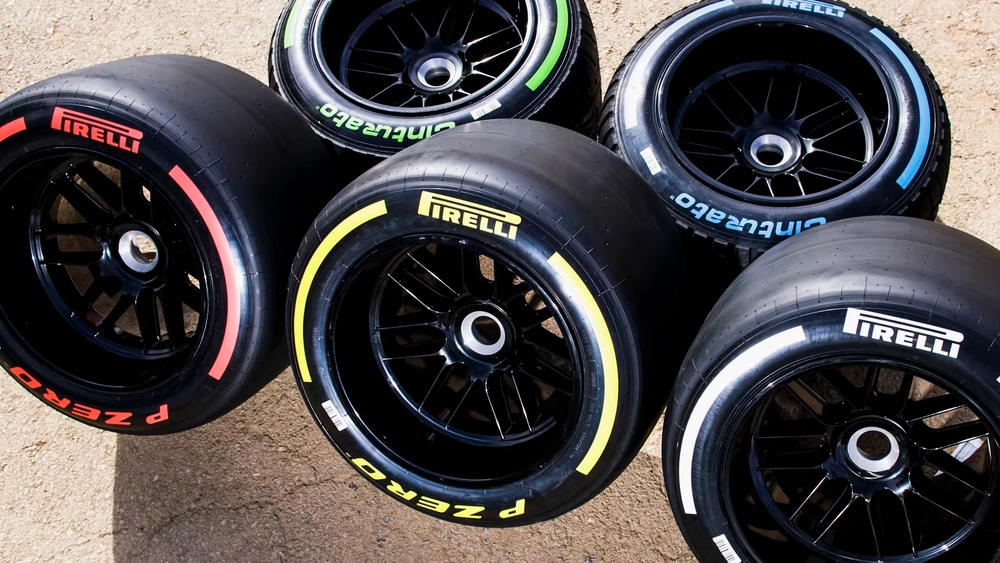
Pirelli, the exclusive tire supplier since 2011, provides teams with a selection of tire compounds, each offering distinct characteristics:
- C0 (Hard): The hardest compound, offering the least grip but the most durability.
- C1: Slightly softer than C0, providing a balance between durability and grip.
- C2 (Medium): Offers a balance between durability and performance.
- C3 (Soft): Provides high grip but wears faster than harder compounds.
- C4: Softer than C3, offering increased grip with reduced durability.Pirelli Global
- C5: The softest compound, delivering exceptional grip with rapid degradation.
Each race weekend, Pirelli nominates three of these compounds, designating them as hard, medium, and soft. The hard compound is typically marked with a white sidewall, the medium with yellow, and the soft with red. Drivers are required to use at least two different dry-weather compounds during a race, unless wet conditions prevail.
Strategic Deployment of Tire Compounds
Teams analyze various factors, including track temperature, surface abrasiveness, and expected weather conditions, to determine the optimal tire strategy. For instance, during the 2025 Australian Grand Prix, McLaren’s Lando Norris capitalized on superior tire management, allowing him to maintain higher speeds due to optimal tire usage. This advantage was attributed to McLaren’s effective interaction with tire temperatures, facilitated by innovative front brake duct designs.
In the 2025 Chinese Grand Prix Sprint, Ferrari’s Lewis Hamilton employed a tactical approach by leading Max Verstappen into “dirty air,” causing Verstappen’s tires to degrade faster. This strategy enabled Hamilton to conserve his tires and secure victory, finishing over six seconds ahead of McLaren’s Oscar Piastri, with Verstappen in third. Ferrari’s Fred Vasseur hinted at this tactic, explaining that Hamilton’s deliberate strategy involved keeping clean air for himself while forcing Verstappen into deteriorating his tires.
Pit Stop Strategies and Timing
Deciding when to pit and which compounds to use during pit stops are critical elements of race strategy. For example, during the 2019 Chinese Grand Prix, Mercedes executed a double-stack pit stop for both Lewis Hamilton and Valtteri Bottas. This maneuver allowed them to maintain track position and ultimately finish first and second, respectively.
In the 2024 Saudi Arabian Grand Prix, the majority of the field opted for a single-stop strategy, highlighting the importance of tire conservation and timing in pit stops.
Impact of Tire Degradation
Tire degradation, influenced by factors such as driving style, car setup, and track conditions, can significantly affect lap times and overall race performance. Teams utilize data analytics to forecast tire energy consumption and degradation, aiding in making informed decisions about pit stops and tire selection. Research has demonstrated the efficacy of deep learning models in predicting tire energy, providing teams with valuable insights to optimize their race strategies.
Recent Developments and Innovations
The 2025 season introduced several changes aimed at enhancing racing dynamics, including modifications to tire compounds and regulations. For instance, the Monaco Grand Prix will implement mandatory two pit stops and the use of at least three tire compounds in dry conditions. This change aims to increase the excitement of the race, as overtaking is notoriously difficult on the narrow streets of Monaco.
Conclusion
Mastering tire strategy in Formula 1 involves a deep understanding of tire characteristics, meticulous planning of pit stops, and continuous analysis of tire performance data. Teams that excel in these areas can gain a competitive edge, as evidenced by recent races where strategic tire choices and management have directly influenced outcomes. As the 2025 season unfolds, observing how teams adapt to evolving tire technologies and regulations will provide valuable insights into the complexities of F1 race strategies.